Here's a fun video that illustrates some of the key points to getting the best location audio possible.

Showing posts with label tips. Show all posts
Showing posts with label tips. Show all posts
Wednesday, June 27, 2012

Tuesday, June 19, 2012
HurlBlog: 'Diffusion for the Digital Age – Using Smoke'

The first diffusion I go to time and time again, whether it is film or HD, is smoke. This is a very powerful tool. Having the patience to use the right smoke to get your levels consistent can infuse a mood, transport you back in time, create style, and a cream effect on a woman’s skin. One tool.
Check out more examples, and the full blog post over on HurlBlog.
Monday, June 18, 2012
IndieWire: 'The Six Things You Must Know to Make it in the Film Industry'
Barbara Freeman Doyle, Chair of the Film Division of Chapman University, shares her insight into how the film business really works in this incisive blog post for IndieWire.
In a business where much of the deal-making and negotiations are verbal, your word and your reputation is EVERYTHING. The film industry is small. Everyone who is established can easily make contact with anyone else or can get the straight scoop by making a few calls. How much you are paid, your title on a project, how hard you work, how honest you are, how you treat people— there are no secrets.Read the entire post here, bookmark it, re-read it, commit it to memory, live it!
Sunday, June 3, 2012
The Black and Blue: 'Three Must-Have Skills for Pulling Focus and How You Can Improve Them'

Pulling focus is hard. Really hard. It’s certainly no walk in the park.Read Evan's list of three essential skills, and how you can practice to improve them over at The Black and Blue.
In fact, it’s one of the most stressful, pressure-filled, ridiculously tough tasks that you can shoulder on a set and the consequences are as simple as they are brutal: miss the focus, ruin the take.
Sounds like fun, doesn’t it?
For those who are good at it, it is. Nothing is more satisfying than keeping an actor’s eyes in sharp focus throughout the entirety of a 30-foot-dolly shot.
But that kind of skill has to be earned — forged in the fires of experience by tapping into and improving certain qualities necessary to pull focus in a seamless way.
So today I want to talk about three of these must-have skills for focus pullers and show you practical methods to improve them so you can panic a little bit less when the DP sets the stop to T 1.8.
Wednesday, May 30, 2012
The Experts Agree: 'Shoot Flat!'

"The idea is to capture the flattest image possible with the most amount of detail and range of exposure possible. Given that the Canon 5Ds compress the video image (it’s not capturing RAW) – you need to make sure you don’t crush the blacks or blow out the highlights as you won’t be able to correct for that in post. You can always add contrast and saturation back to an image in post- doing the opposite is significantly more difficult especially off of the compressed file that the Canon 5Ds produce."Check out what both of these experts have to say. Here's Stu's article. And here's Vincent's.
Wednesday, May 9, 2012
How to Organize an Edit
Here's a helpful video for beginning editors on how to organize your footage when starting an edit. Host Richard Harrington uses Adobe Premiere, but his concepts are easily transferable to Avid, FCP, and other NLE's.
Thursday, March 29, 2012
Tuesday, March 13, 2012
Evan Richards: 'Reverse Key Lighting'

The idea is that the key light is placed behind the subject rather than in front (the way you would probably see it set up in most cinematography books).Read the rest of the article, which includes images from numerous blockbusters such as True Grit (above), here: http://evanerichards.com/2012/2463
Friday, March 9, 2012
Flim Slate: 'How to Break Down a Screenplay'
You can never prepare too much before shooting a film. For instance, I just watched “Saving Private Ryan” for the umpteenth time and there it was: a mistake that I’d never noticed before. The translator has rounded up a group of Germans. One of the Germans mouths off and the translator shoots him, then tells the rest of the group to move off. We cut to a shot of the Germans marching off and there’s no dead German on the ground.Read the rest on Film Slate!
Someone made a mistake in breaking down the script and no one caught it.
Thursday, March 8, 2012
nofilmschool: 'Getting Better as a Director: Using Objectives'
One of the fundamental tools for an actor is their “objective.” This is a specific way of working with character “motivation.” Discovering a character’s objective begins with asking the question “what does this character really want or need during a particular scene?” This is not to be confused with what the character says in the dialogue. We are looking for the “subtext” or unspoken desires of a character that can be channeled into specific behavior.Read the rest over on nofilmschool.com!
Friday, March 2, 2012
Premium Beat: 'Wisdom for Editors'
Writer Danny Green over on PremiumBeat.com has compiled a handy list of 140-character nuggets of advice (i.e., Twitter posts) from working editors and post-production professionals. From working with clients to what tools to learn, the business side of working as an editor is pretty well covered. Plus you'll get some new people to follow on Twitter. Read the article here!
Tuesday, February 21, 2012
NewEnglandFilm.com: 'How to be a Master Editor'

She says, not enough filmmakers these days take the time to study the technique editors used before the days of digital editing. "One of the things I find disturbing is when a film professor announces they're going to show a black and white, there's a groan in the room," she says.Read the rest of Schoonmaker's insights here: http://newenglandfilm.com/news/archives/2007/05/thelma.htm
Friday, November 18, 2011
Exposure Guide: 'Focusing Basics'

Thursday, November 17, 2011
Networked Blogs: 'Inventing Your Career'
Here's a blog post I saw that I thought would help anyone looking for that career stepping-stone right out of college:
I know for certain that when you invent your own career, you consciously choose to leverage your own talents, your own skills, your own preferences – rather than contorting yourself to fit into a narrow job description of someone else’s design.Read the rest here. Great stuff.
Monday, November 14, 2011
Considering the move to Los Angeles?
If you're like many UAT Digital Video students - or film students in general, for that matter - you're probably considering moving to Los Angeles after college in order to get your career going. Wise move. (And if you're not considering the move, as yourself "Why not?") Well, here's the resource you've been looking for: I'm Moving to L.A., a website specifically for you. (The site's subtitle is "Real advice from real people on how to live and survive in Los Angeles.) Bookmark it now!
Wednesday, October 12, 2011
fxguide: 'The Art of Roto: 2011'

Rotoscoping is the process of manually altering film or video footage one frame at a time. The frames can be painted on arbitrarily to create custom animated effects like lightning or lightsabres, or traced to create realistic traditional style animation or to produce hold-out mattes for compositing elements in a scene and, more recently, to produce depth maps for stereo conversion.
As a VFX artist, you are primarily creating motion graphics or visual effects. A thorough knowledge of rotoscoping and roto tools is vital to solving a vast amount of problem solving in VFX: rig removal, stereo conversion, greenscreen compositing, hold out mattes, split screens, and even object or feature-based color grading. It is perhaps one of the widely used tools in visual effects.It's a lengthy read, but well worth it. Bookmark it for future reference, too!
Tuesday, October 11, 2011
The Black and Blue: 'How to Share Your Opinion on a Film Set (If Asked)'
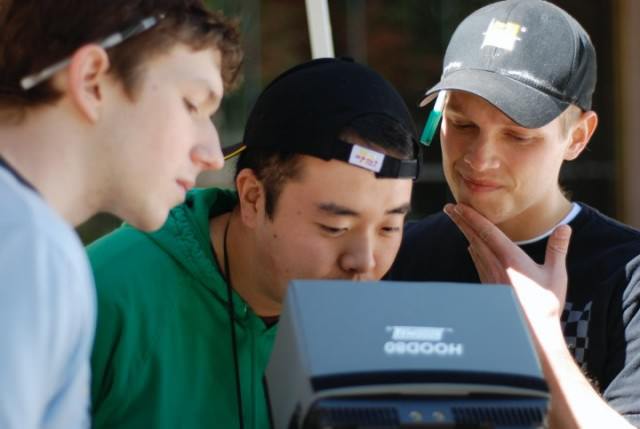
Nobody cares about your opinion unless they ask.
And even then, they might not really want to hear it.
On numerous occasions, I’ve watched newbies make the mistake of either sharing too many of their thoughts, sharing too little, or just plain saying the wrong thing at the wrong time.Read the rest over on The Black and Blue. And while you're at it read this article there too: "10 Ways to Guarantee You Never Work On Set Again." Don't be the newbie who shoots off his mouth on set and squashes his career before it even starts.
Friday, September 30, 2011
Vimeo's New 'Music Store'

As many of you know, finding music for your videos can be somewhat… well, painful. Licensing music on your own can be confusing and finding good free music can take forever. Many of us here at Vimeo are video creators or filmmakers as well and we experience these frustrations on a regular basis. So, we decided to do something about it.
Introducing Vimeo Music Store!
Vimeo Music Store is your one-stop-shop for finding, discovering and licensing high quality music for your videos. We’ve built a simple and intuitive interface for you to easily search for music using a variety of different music criteria, and then purchase and/or download the tracks you want. Search mood, genre, tempo, themes, instrumentations and then use the advanced search to whittle down the results even further.
As of now, Music Store offers over 45,000 curated tracks with a three different license options for you to choose from. Here’s the skinny:
Creative Commons-licensed music is curated and provided by Free Music Archive, one of the most-respected curators of Creative Commons-licensed music. There are many different Creative Commons licenses available, so make sure to learn more about Creative Commons and how to use them in our FAQ.
Paid music tracks are provided by Audiosocket, a music and media company that curates its content to deliver up-and-coming talent to the marketplace. Audiosocket’s catalog includes over 33,000 songs from more than 1900 emerging bands, composers and record labels from around the world. Audiosocket’s catalog offers both personal, non-commercial licenses for $1.99 per track and commercial licenses for $98 per track.
As a a token of our appreciation, we’re offering all Plus and PRO members one FREE, personal license track (a $1.99 value). This offer is only available for one week starting today, so make sure to head over to Music Store and cash in!
We’re very excited about this first phase of Vimeo Music Store and we hope you like it. Look for more features, more partners and more options for bands and musicians in the future!
Love,
Vimeo
Sunday, September 25, 2011
The Black and Blue: 'How to Read the DP’s Mind & Stay One Step Ahead'
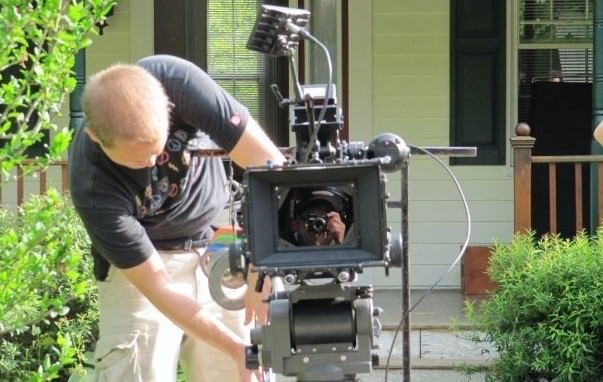
You can do your best to anticipate and predict what the DP wants and, when you’re right, it will seem like you read their mind. They’ll be both amazed and pleased that somehow you managed to get everything exactly how they wanted, all without even telling you.Read the whole article here, and subscribe to The Black and Blue right away!
Friday, September 23, 2011
Wired: '5 Film-School Violations in Videogame Cut-Scenes'
For the Game Art & Animation student who wasn't sure why he was taking DVA101, or the DV student who ends up working in the videogame industry after graduation, Wired.com has published this scathing essay on why so many videogame cutscenes fall flat:
... there's one element of interactive storytelling that designers just can't seem to get right: the cut-scene. Some exceptions exist, but these control-free cinematic sequences often prove uncomfortable if not downright embarrassing to watch. While they are almost always packed with gorgeous eye caramel, games' cut-scenes usually drop the ball when it comes to effective storytelling.
This is because many cut-scenes don't follow the time-tested rules of cinema that have made Hollywood so successful. Gamemakers abide by their own rules, packing their cinematics with wanton expositions and explosions. But cut-scene designers would do well to learn from the past century of film and its storytelling practices.Read the rest here!
Subscribe to:
Posts (Atom)