Showing posts with label cameras. Show all posts

Sunday, June 3, 2012

The Black and Blue: 'Three Must-Have Skills for Pulling Focus and How You Can Improve Them'

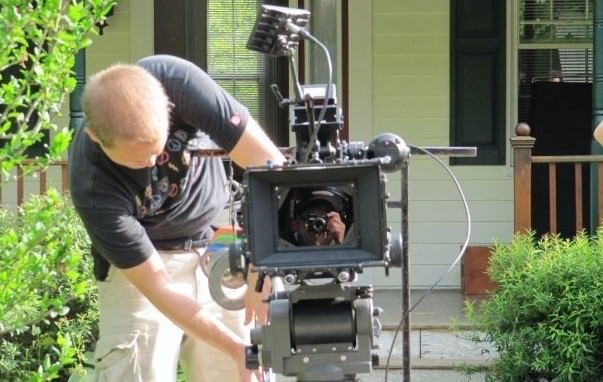
Evan Luzi over at The Black and Blue Blog has written a really helpful article on focus-pulling, an essential skill for anyone considering a career in the camera department:
Pulling focus is hard. Really hard. It’s certainly no walk in the park.

In fact, it’s one of the most stressful, pressure-filled, ridiculously tough tasks that you can shoulder on a set and the consequences are as simple as they are brutal: miss the focus, ruin the take.

Sounds like fun, doesn’t it?

For those who are good at it, it is. Nothing is more satisfying than keeping an actor’s eyes in sharp focus throughout the entirety of a 30-foot-dolly shot.

But that kind of skill has to be earned — forged in the fires of experience by tapping into and improving certain qualities necessary to pull focus in a seamless way.

So today I want to talk about three of these must-have skills for focus pullers and show you practical methods to improve them so you can panic a little bit less when the DP sets the stop to T 1.8.
Read Evan's list of three essential skills, and how you can practice to improve them over at The Black and Blue.

Wednesday, May 30, 2012

The Experts Agree: 'Shoot Flat!'

Both Stu Maschwitz (author of The DV Rebel's Guide) and Vincent Laforet (director and DP of many Canon 5D-shot films) have recently posted their processes for getting the best results out of their DSLRs. Basically the short version is "Shoot flat!" In other words, shoot with the least amount of contrast and give yourself the most latitude for color grading in post. Or in Laforet's words:
"The idea is to capture the flattest image possible with the most amount of detail and range of exposure possible.  Given that the Canon 5Ds compress the video image (it’s not capturing RAW) – you need to make sure you don’t crush the blacks or blow out the highlights as you won’t be able to correct for that in post.    You can always add contrast and saturation back to an image in post- doing the opposite is significantly more difficult especially off of the compressed file that the Canon 5Ds produce."
 Check out what both of these experts have to say. Here's Stu's article. And here's Vincent's.

Tuesday, May 29, 2012

Filmmaker Magazine: 'Ten Tips on Shooting Low-Budget Movies from SXSW'

At this year's SXSW in Austin, Texas, a panel titled “The Great Cinematography Shootout” gathered a group of directors and cinematographers to discuss shooting independent films with lower-cost, high-quality cameras, like the Canon 5D (such as Sunset Stories, pictured here). Read the panel's 10 awesome tips here.

Saturday, February 25, 2012

ProLost: 'Red Scarlet, Canon C300, and the Paradox of Choice'

Late in 2011 when Canon announced its new "Cinema EOS" line of cameras with its new model, the C300, tech guru, filmmaker, and DV Rebel's Guide author Stu Maschwitz as usual cut right to the heart of the issue of what camera to buy, and when:
All filmmakers are on a journey, and that journey is going to take you through many cameras. It’s dangerously easy to get swept up in advancing technologies, and all-too tempting to think that a new camera will slingshot your filmmaking forward.
Read Stu's entire post for the run-down on the capabilities and pricing of the current crop of digital cameras, from the Red Epic M ($43,000) down to the Canon Rebel T3i ($659).

Wednesday, December 7, 2011

What is Color Sampling?

Any time a new camera is introduced to the market, one of the key specs that gets bandied about is "color sampling." Is it 4:4:4? 4:2:2? 4:1:1?

What do all these numbers mean, and how do they relate to how our images look? Here's a simple explanation with good diagrams for comparison, written by Graeme Nattress, published courtesy of Larry Jordan and Associates.

Monday, December 5, 2011

Inspiration: Stargate Studios' 'XXIT' Shot with the Canon C300

Test videos shot with Canon's new "Cinema EOS" C300 system are starting to hit the web, but none are as closely aligned with the type of filmmaking we do at UAT as this one. Produced by VFX house Stargate Studios, "XXIT" is a 12-minute film that channels a bit of Blade Runner while also showing the extreme range of the C300's capabilities.


The "making of" video below is not only a great primer for shooting on a "virtual backlot," but is also an in-depth look at the many features Canon included in their first Cinema EOS offering.

Thursday, December 1, 2011

Pixiq: 'Everything About Camera Lenses'

What's the most important part of your camera? The body or the lens? Author and photographer Haje Jan Kamps argues that it's the glass, and we're inclined to agree. His article on Pixiq.com covers the fundamentals of how lenses work, and discusses apertures, depth of field, focal length, and much more. Mandatory reading for you cinematographers!

Friday, November 18, 2011

Exposure Guide: 'Focusing Basics'

Here's a handy graphical guide to the relationship between lens aperture and subject distance to depth of field. Worth a look even if you think you have a good handle on it! Check it out here on Exposure Guide.

Thursday, November 10, 2011

60 Minutes Overtime: 'Filming mountain climber Alex Honnold'

What do you need to film a segment on a rock climber who scales thousand-foot sheer cliff faces without a rope? Fourteen cameras and nerves of steel.

Wednesday, September 28, 2011

Philip Bloom: 'Canon DSLRs: some of the best picture profiles out there'

Filmmaker and DSLR aficionado Philip Bloom continues his tradition of posting the latest info on the emerging trend of the DSLR "picture profile." On cameras such as the Canon 5D Mark II, the picture profile editor can allow a user to dial in just the right set of parameters to make color grading easier and more impactful.
For all projects that I am producing, I always shoot the flattest image I can get. However, when shooting for others, if the turn around time does not allow for colour timing/correction, I will shoot less flat (typically neutral).

Now you ask, why is a flat profile important? Well, when you bake-in the color/contrast settings into an image (pre-set PP’s), you are unable to retrieve information that would be available if you had shot flat. Say your sky is blown out, but you wish you could see some of the clouds that were there on the day. With a baked-in image style, you are not able to recover it. With a flat image, you have a much better chance of recovering the clouds — OR if you under or over-expose something, you have a better chance to recover information that would otherwise be lost.
Read the rest here!

Sunday, September 25, 2011

The Black and Blue: 'How to Read the DP’s Mind & Stay One Step Ahead'

The Black and Blue is a blog designed for Camera Assistants (known as "AC's" in the biz), and is definitely worth subscribing to if you're considering a career behind the lens. Recently they posted a great article about how to anticipate the needs of your Director of Photography and come out looking like an absolute star.
You can do your best to anticipate and predict what the DP wants and, when you’re right, it will seem like you read their mind. They’ll be both amazed and pleased that somehow you managed to get everything exactly how they wanted, all without even telling you.
Read the whole article here, and subscribe to The Black and Blue right away!

Wednesday, September 21, 2011

Vincent Laforet and Vimeo go 'Behind the Glass'

Filmmaker / cinematographer / DSLR guru Vincent Laforet recently collaborated with the staff at our favorite video-hosting site Vimeo to produce a stellar series of basic lessons on lenses and depth of field called "Behind the Lens." Here's the first episode, but be sure to surf over to Vincent's blog to read the accompanying article and watch episodes 2 and 3!

Thursday, August 11, 2011

CAPTAIN AMERICA Action Shots Captured with Canon 5D Mark II DSLRs

From DV.com:
Canon U.S.A. has announced that the highly anticipated feature film, Captain America: The First Avenger, used Canon EOS 5D Mark II Digital SLR cameras to capture many of the movie’s action shots. Throughout the super hero action picture, the 5D Mark II was used to shoot motion sequences that were seamlessly integrated with the production’s 35mm film footage.


Read the full article here.

Sunday, February 27, 2011

What’s the Difference Between the ARRI ALEXA and RED Cameras? One Humorous Explanation

Another great find over on nofilmschool.com:
The ARRI ALEXA and RED EPIC (and RED ONE M-X) are cameras that we’ll be seeing hundreds of features shot on over the next several years. What’s the difference between the two? Check out this amusing video from Inspiration Studios, whose comparison of the ALEXA and RED cameras includes a none-too-subtle suggestion about the fading utility of their DSLR rental package:


Sensible Digital Cinema: The Arri Alexa from Inspiration Studios on Vimeo.

Thursday, February 24, 2011

120 FPS is Nothing: Here’s What 2,564 FPS on a Phantom Flex Camera Looks Like

Picked this one up on nofilmschool.com:
With RED touting 120 frame-per-second shooting speeds — impressive on its own, and even more impressive given each frame is at 5K resolution — Vision Research’s claims that their new Phantom Flex camera shoots at up to 2,800 FPS (2,500 in 1080p) seems like a joke. But it’s not, and the following is proof. Tom Guilmette was hired to shoot the World Champtionships of Ping Pong, and found himself alone in his hotel room before the shoot with the Phantom Flex; here is the resulting video.

Locked in a Vegas Hotel Room with a Phantom Flex from Tom Guilmette on Vimeo.

Tuesday, February 8, 2011

Brain Farm is Revolutionizing Filmmaking with Technology

Curt Morgan, the director and producer behind Brain Farm Cinema, has pioneered an entirely new style of action-sports filmmaking. Using cutting-edge cameras mounted on trucks, helicopters and snowmobiles, Brain Farm captures intense action without sacrificing scenery.


Originally posted on Motherboard.

Monday, December 13, 2010

How to Increase Canon 5D/7D Dynamic Range

Photographer and DSLR videographer Luka has shared this video on his Vimeo page that has some great tips for getting the most of your Canon DSLR footage. He specifically talks about the 7D but these concepts all apply just as well to the 5D Mark II. A very funny and informative tutorial!

How to increase the Canon 7D dynamic range (Tutorial) from Luka on Vimeo.

Thursday, October 14, 2010

DP Shane Hurlburt Explains His HDSLR Shooting Protocol

For all of you venturing into making films using the Canon 5D Mark II or 7D or similar HD-enabled DSLR cameras, this invaluable video comes courtesy of Director of Photography Shane Hurlburt (DP of Terminator Salvation among many other films).

Monday, September 21, 2009

Everything is About to Change: Arri's New Digital Camera System

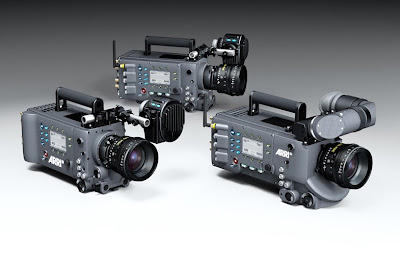
Arri has released early specs for its new family of digital cinema cameras, featuring 35mm-sized sensors and light sensitivity equivalent to 800 ISO filmstock. Coupled with the ability to use a vast array of cinema prime lenses, high-resolution electronic viewfinders, or traditional optical viewfinders, these new cameras reflect Arri's longtime commitment to providing filmmakers with the tools they really want.

Arri has also provided a searchable, indexed HTML version of Quantel's "Digital Fact Book" - an incredibly inclusive glossary and reference guide to digital video technology. The Digital Fact Book is also available as a PDF.

Monday, August 17, 2009

Red One, Canon 5D Mk II, and Panasonic Lumix GH1 Footage Comparison

Here's an amazing bit of footage posted by premiere Hollywood equipment rental house Birns and Sawyer on their Vimeo channel.

Red One, Canon 5D Mk II, and Panasonic Lumix GH1 Footage Comparison from Birns and Sawyer on Vimeo.


What's so amazing about it? It compares side-by-side-by side the output of three hype-worthy cameras - the 4k-capable digital cinema RED ONE camera (roughly $20k) and two DSLRs equipped with "movie" modes, the $3500 Canon 5D Mark II and the $2200 Panasonic Lumix GH1. This is the first time I've seen footage from the Panasonic, and the first time I have seen anyone cut together material from a RED with footage from a DSLR. What it shows is that the technology has definitely shifted and this new generation of DSLRs are game-changers in terms of comparing price to image quality.