
Check it out here! Definitely worth a look for our students considering a career in VFX.

cinemetrics is about measuring and visualizing movie data, in order to reveal the characteristics of films and to create a visual “fingerprint” for them. Information such as the editing structure, color, speech or motion are extracted, analyzed and transformed into graphic representations so that movies can be seen as a whole and easily interpreted or compared side by side.Here's a demonstration video:
The Ice Book (HD) from Davy and Kristin McGuire on Vimeo.
"All we had was a 5D Mark ii, an old Macbook with After Effects, some builders lights and a green cloth that we improvised as a makeshift green-screen. Before we started we had no idea how to make pop-up books let alone how we could combine them with projections."
The Commuter is a nifty little action-packed film, directed by the McHenry brothers, and starring Dev Patel, Pamela Anderson, Charles Dance and Ed Westwick. Its distinguishing feature, however, is the fact that it was shot entirely with Nokia’s new flagship smartphone, the Nokia N8.
 Each year, there is always a “big push” or “fad” that every vendor, every company and every person through the company is promoting so heavily its beyond obvious. Last year was High Def and the big switch over to HD alongside with the beginnings of 3D technology. This year, I walked into the convention center and the first thing I see is the giant Evertz booth (a broadcasting company that does mostly routing and audio for news broadcasting) with the slogan of “Real 3D solutions.” 3D is the "it" thing this year. The booth next to it, Miranda (similar to Evertz) was heavily pushing 3D as well, and how they are developing a way to have a “stereoscopic signal” in order to broadcast 3D (hmm... 3D news soon?) Both Evertz and Miranda had 3D cameras on display, a rig created out of two different cameras one horizontal in the normal position, the other, vertical pointing downwards, perpendicular with the first camera, wired together, one big lens added on and thrown on a tripod. I found this absolutely fascinating until I wandered (with Paul’s advice) over towards the Panasonic booth (shall I say area? They took up a lot of space).
 We practically ran into Sony, in fact, you couldn’t miss it. Sony takes up its own region in the conference central hall (by the way, Vegas has one of the biggest conference centers in the nation, so taking up its own region is pretty big) Sony was a complete playground. With a good half of it devoted to awing people with a massive, absolutely massive, 3D LED TV. No surprise that they had a 3D LED TV, but I will say this for it, it is incredible. They played pieces of a football game, and it was the same as standing on the field next to my dad at a Seahawks game. It was exactly like being right there. They played an underwater in Hawaii series of clips, it was just like diving off the beach of Maui all over again. The glasses we were given to use were the basic Real 3D glasses, and I decided they are not that bulky at all. Rather they are light weight and do not affect your vision when not looking at a 3D screen. If I have to walk around in glasses like that for the rest of my life in order to continually watch football as though I’m standing on the sideline, it may be worth the fashion no-no.
 While over at the Sony booth (playground) there was a 3D truck, a mobile broadcasting truck to be able to broadcast in 3D, didn’t make it in though, there was a long line of men from Japan anxious to see. Of course, there was the Sony Vegas area (skipped that, not worth my time) and the camera booths showing the camera quality. There were two 3D cameras that Sony was promoting, neither a twin lens one such as the Panasonic camera. This I was surprised about. I would think that a company who is so heavily promoting their new 3D LED television would have a camera that is as high tech as the television itself. Not that having two cameras perpendicular isn’t high tech, obviously more than I came up with, just surprised they did not have the twin lens camera at least in development as competitor Panasonic does.
 And finally…the Triple A’s. The big dogs of what we do in our Digital Video Program at school. The guru’s who make the software so we can make it happen. The…okay enough raging about how “A”-mazing (ha.ha.ha …not.) are. Let us start with Avid. Avid is up to Media Composer 5, I did not, however, manage to make it to a presentation today on the Avid editing software, though did see the interface being quite pretty. They have released new Mojo boxes and Digiboards to run with the Media Composer Software (all locked up in a nice case so I couldn’t examine either). The entire series is referred to as “Avid Nitrix DX” I will be curious to see tomorrow what has changed about it all. I can already guess it is a 64 bit native software and pro tools has seamless integration (make a change in Pro Tools, makes the change in Avid without extra hoops to jump through).
 Autodesk. Surprisingly, they were not focusing on just Lustre (color correction) as normal. They were focusing on the usability and how to use, Smoke (Autodesk’s version of After Effects…the new Combustion). On a Mac. Very specifically. On a Mac. My favorite feature after watching part of a demonstration on Smoke was the flow chart organization. It is similar to the old Combustion flowchart setup, but I feel as though this one was easier to understand than when I learned Combustion. The keying features were nice, but then again they had a lot of the effects preset so he could easily demonstrate what the software can do. (Of course maybe they come preset in the software too…)
 The other demonstration going on at the time was about 3DS Max 2011. Now I’m not a big 3DS Max user, in fact I have used it very minimally and not to much success. The feature he was really showing off though was the ability to texture right within Max, and how you could begin a texture wrap in Max, export and link the file to Photoshop, continue it in Photoshop and it would make the change right there in the Max texture wrap as well, and instantly apply it to the model. (Just a side note to everyone, ALL and I mean ALL design users, from Autodesk and Adobe were using tablets only, nothing else. They were incredible with the tablets too, and when asked one said he is “faster with a tablet than with a mouse and keyboard anyways”).
 Annnnd finally…Adobe. With the release of their Creative Suite 5 today, (and if you bought it on the floor today you were eligible to win an Nvidia Quadro FX 4800 and a free gift with purchase…OoOo). The CS5 Suite is native 64 bit design. This is supposedly one of the biggest changes made to the software. Adobe claims that this will make “HD just as fast as SD”. Adobe has made collaborating between multiple software’s easier. Not just between Adobe software’s (that was always easy) but collaborating footage and images between Avid, Final Cut Pro and of course, Premier Pro. Adobe has partnered with CNN to create an easier to use workspace for “journalism” and “news editing”. Meaning for us moviemakers that the interface will be very easy to use (if it wasn’t already before….) In CS5, they have decoupled the rendering capabilities, meaning a project can be created on one machine, but sent to another to render instead. This would be extremely useful for us if we wanted to set render queues up on 2-4 reliable machines and not use the entire DV Lab plus three classrooms hoping ten machines will actually finish renders and not crash halfway through. CS5 looks to be a good upgrade but not necessary if 64 Bit systems are not being used.

Despite prominent ridicule of Michael Bay's predilection for prioritizing gratuitous explosions over plot, 2009's Transformers sequel Revenge of the Fallen held top spots the box office charts for nearly two months before other high-profile films (Harry Potter 6, followed by District 9) stole the limelight -- no small feat considering the across-the-board panning it received from both esteemed reviewers and die-hard Transformers fans alike. Some argue that on-screen combustion and extensive action scenes cater to our generation of movie-goers which, when combined with the American public's fondness for escape via entertainment, contributed to the film's profits.
Professor James Cutting of Cornell University believes blockbuster success is due, in part, to manipulation of the audience's attention span.
Utilizing a process called the 'Fourier transform', people like James Cutting are able to apply a mathematical pattern of waves (representing the lengths of shots in a movie) known as 1/f fluctuation, to the behavior of a consumer's attention span. When overlaid, the two plots illustrate a significant effect made by the timing of cuts in accordance the audience's fluttering attention span.
 Gizmodo.com: "...the more recent the blockbuster,
the more closely the length of its shots followed that
same fluctuation."
In the diagram above, Cutting compares the editorial timing of three movies from vastly separate eras. 2005's King Kong, though delivering less than was hyped, largely adheres to the 1/f pattern, whereas 1945's Detour, held in high regard, shares little resemblance. Yet despite its shortcomings, King Kong profited as admirably as Detour. The remarkable thing about this pairing is that King Kong tips the scales at over three hours long -- quite the oddity in a society driven by instant gratification and multitasking -- but succeeded in captivating its audience by following the 1/f formula. To contrast, the audiences flocking to Detour hadn't suffered from the same attention deficiency, allowing the film to flourish on its own merits.
Quotes PopSci.com:
“Cutting doesn’t believe that this increasing conformity to the 1/f fluctuation resulted from a conscious decision on the part of the directors. Rather, he theorizes that films which fall into people’s viewing sweet spot better hold their attention, and thus seem more gripping, and make more money. Then the other directors naturally copy the pace of the more exciting, more profitable movies, and the 1/f fluctuation trend spreads.”
Not even industry-revolutionizing productions are exempt from using the Fourier transform method to engage their audiences. James Cameron's Avatar, weak in plot but employing myriad visual tricks and treats, is now the highest-grossing film of all time, not accounting for inflation. George Lucas' Revenge of the Sith, though victim of Lucas' diminishing popularity and riddled with continuity errors, also placed highly at the box office. While these two examples are deserving of their box office recognition (the former ushering in a new age of film-making and the latter delivering the final chapter of a hugely successful and cultural franchise), the relative success of the Transformers sequel could have the 1/f formula to thank for its domestic accomplishment, as might an alarming number of big-budget films from the past decade.
So while film students everywhere strive to instill innovative and artistic value into their productions, they'd do well to introduce another factor into their work: the Fourier method of ensnaring the masses.
James Cutting's full text can be found here.
 "These kids are ALL your students?" Danny Trejo asked me. It was May 2008 and we were on the set of my short film "Cowboy Dreams." Or more accurately, on location - a distant patch of dirt in WAY north Scottsdale - and we were entering our 15th hour of production on a day beset by 30 degrees' worth of temperature changes, bugs the size of softballs, and a couple of supposedly "harmless" snakes. As one would expect, action-movie icon Danny Trejo was a real trouper and handled the work - and the weirdness of the day - with cool professionalism. "I can't believe they're all just college students," he continued. "They all really know what they're doing, man. I wouldn't have known that they weren't professionals." And he laughed with that signature laugh of his that might be the last thing you hear before he kills you with his bare hands if he wasn't the nicest guy in the world.
This is not the first time I have heard this sort of sentiment about my students. Nor was it the last. I have heard it time and time and time again, from producers, directors, actors, writers, cinematographers, editors, film festival programmers, Emmy selection committees, and more. So when Danny Trejo said it, I felt a familiar sense of pride and smiled a familiar smile. He was saying exactly what I expected him to say, just as his co-star Bill Engvall had earlier in the day.
Now I hear my students leading the charge against the Senior Innovation Project and to be honest, I am as proud of them about that as I was that day on the set of "Cowboy Dreams." Because that ability to think critically, ask the hard questions, and challenge the status quo is what sets UAT students - ALL of you - apart from those that would be considered "just" college students. And that is the soul of "innovation."
I know a lot of you in the arts degrees feel like the Senior Innovation Project is the UAT administration's way of somehow penalizing you for choosing the arts instead of the sciences. For a while I felt that way too, even though I was asked to "get behind SIP" and help make it more palatable to my students. "But my students need to be honing their skills, producing work, and building their portfolios - not writing proposals and filing patents!" I thought. But that's because - like many of you - I think that "innovation" word intimidated me. In my mind "innovation" in digital video was only happening in the labs of the camera manufacturers like Sony and Canon, in the code-pits of software companies like Avid and Adobe, in studios like Pixar or Industrial Light and Magic with visionaries like John Lasseter or George Lucas at the helm, or on productions like Avatar with a seemingly limitless budget and a decade or more of research and development. "How the hell am I supposed to teach my students THAT?"
But wait a second... film grammar hasn't changed IN A CENTURY. All of us who work in this medium - from Lucas and Lasseter all the way down to you, me, and the 13-year-old kid in his backyard with a Flip camera - are using the same types of shots pioneered by D.W. Griffith and editing with the same principles established by Sergei Eisenstein in the silent era. So when James Cameron was making Avatar, sure, he was innovating - but he was also taking part in an established continuum of filmmaking aesthetics and technology that dates back to the end of the 19th century. So you could say that the statement that "there's no way to innovate shots and cuts" is a spurious argument against SIP because Cameron and these other innovators we all so admire are proving that argument wrong on a daily basis. They are using new tools to create new solutions to new problems that Griffith and Eisenstein couldn't even imagine much less solve in their day - but all these new tools and solutions are still in service of a storytelling style that hasn't significantly changed in spite of the fact that LITERALLY everything else has in the past century.
Let's look at this word "innovate." What does it mean? Dictionary.reference.com defines it as: "to introduce something new; make changes in anything established." By that definition I would argue that you are all ALREADY innovating. The fact that an established, seasoned professional such as Danny Trejo looked upon a group of UAT students as something more than "just college students" meets this definition. As a group, the students of the UAT Digital Video Program made a change in something established - they "innovated" the perception of what a college student could be. And I would argue that all of you do that on a daily basis.
The problem is, most of you don't know how to communicate it effectively. You don't give yourselves the credit you deserve as innovators, much less blow your own horn about it. I'd bet that nearly every student at UAT knows I am the resident filmmaker around here and knows me at least by name if not by sight. The DV Program gets a disproportionate share of attention from the marketing department, the provost, the deans, the president, vice president, etc. etc. EVERYONE asks me what I'm working on next, how is "Fallout" going, when are we having a screening, blah blah blah ad nauseum. Why is that? IT'S BECAUSE I NEVER SHUT UP about what I am doing, what my students are doing, and what cool project we have coming next, that's why!
So what does this mean for you as an arts student as you face your SIP requirement? Well, first really stop and think about what you're innovating. Not what you could innovate, would innovate, should innovate, yadda yadda yadda - what you ARE innovating. RIGHT. NOW. (And if you're NOT innovating, then you need to fix that today.) But I would guess that most of you are. I KNOW my students are, because I see them in the Editing Lab and the Greenscreen Studio everyday, thinking through solutions to apply off-the-shelf equipment and software to solve complex problems that are unique to the projects they are working on. No, we're not making Avatar - but we ARE doing groundbreaking stuff that other college students aren't even dreaming about - without the benefit of a bajillion dollars and a decade of research and a team of programmers and IV drips full of espresso. (If one of you could innovate that last one I would be really, really happy.)
Now look at SIP as your time to shine, your opportunity to blow your own horn and let all of UAT and beyond know what you are doing. And not just that it's "cool" or "fun." SIP is about expecting more than that. It's about expecting you to be able to communicate your passion, your thought process, and your ability to think outside the box in a way that engages and informs your audience. (Kinda like what you're doing when you make a movie, animation, or game.)
So your mission now is to take all your anger over SIP, all that vitriol you have spewed at the Student Government meetings and on these boards, all your fear, doubt, and worry, and put ALL that energy into taking the innovations YOU'RE ALREADY DOING and make them work as your SIP, rather than wasting another second on something you are ambivalent about at best. No, you may not be building the world of Pandora or building a camera to rival the RED - but you ARE doing so much more than the average college student. Believe me when I say this. And if you don't believe me, then you HAVE to believe Danny Trejo. Or he may kill you with his bare hands.
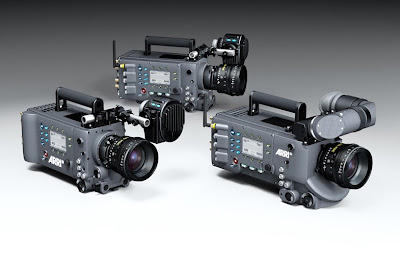 Arri has released early specs for its new family of digital cinema cameras, featuring 35mm-sized sensors and light sensitivity equivalent to 800 ISO filmstock. Coupled with the ability to use a vast array of cinema prime lenses, high-resolution electronic viewfinders, or traditional optical viewfinders, these new cameras reflect Arri's longtime commitment to providing filmmakers with the tools they really want.
Broadcast network CBS will be advertising its fall TV season with a video-chip ad embedded in an issue of Entertainment Weekly.
The September 18 issue of the Time Inc.-owned magazine will feature the first video ad to appear in print, George Schweitzer, CBS marketing president, said Wednesday at a press conference at the company's headquarters here.
Red One, Canon 5D Mk II, and Panasonic Lumix GH1 Footage Comparison from Birns and Sawyer on Vimeo.
 CNET's Rafe Needleman has posted an insightful blog post about 3D stereoscopic imaging and its impact on current and future entertainment trends in film, TV, and videogames. Like it or not, it seems 3D is here to stay for the immediate future and will continue to be a growth area in both content creation and emerging technologies.
3D is still seen as gimmick by most consumers, but it's becoming more mainstream. That means content producers and artists will be thinking about 3D content more in the near future: Not just how to have it call attention to itself, but rather how to have 3D fade, as it were, into the background of the storytelling.Read the rest here.
 Silicon Imaging, a leader in digital imaging and one of the companies on the forefront of the digital cinema revolution, has issued a press release detailing the unique SI-2K Digital Cinema Camera rigs created for Best Picture winner Slumdog Millionaire.
A customized camera support and recording package had to be built to meet the unique form factor demands of the Slumdog shoot. They enlisted Pille Film, of Wiesbaden Germany, to create a custom solution which included a gyro stabilizer for the base of the SI-2K Mini. Instead of using the traditional film-style camera body, they elected to use Apple Mac book Pro notebook, running Windows XP, for the recorders, and built them into ruggedized backpacks, to be worn inconspicuously. Stefan Ciupek, the show’s technical supervisor and additional camera operator, coordinated the design and modifications of the camera system with Wolfgang Damm of Pille, whose team worked around the clock to get the 2K Mini rigs built.Read the complete press release here.
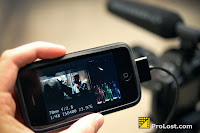 If you're a UAT student searching for a concept for your SIP (Senior Innovation Project), how about this one, posited by none other than our DVA101 textbook author, Stu Maschwitz?
