Sunday, February 27, 2011

What’s the Difference Between the ARRI ALEXA and RED Cameras? One Humorous Explanation

Another great find over on nofilmschool.com:
The ARRI ALEXA and RED EPIC (and RED ONE M-X) are cameras that we’ll be seeing hundreds of features shot on over the next several years. What’s the difference between the two? Check out this amusing video from Inspiration Studios, whose comparison of the ALEXA and RED cameras includes a none-too-subtle suggestion about the fading utility of their DSLR rental package:


Sensible Digital Cinema: The Arri Alexa from Inspiration Studios on Vimeo.

Saturday, February 26, 2011

Drive in a Car Without Driving in a Car!

This cool tutorial video comes from the guys at FilmRiot. Think about these tips next time you plan a driving scene.

Friday, February 25, 2011

Using Stills to Create Matte Painting Effects in Your Footage

Here's a cool technique, using the still-photography function of your HDSLR to gather more information and more latitude than the HD video function alone can capture. This "tutorial" is a little dry, but stick with it. This technique opens up LOTS of possibilities!

How to use stills to create simple matte painting effects for your DSLR footage from Robino Films on Vimeo.

Thursday, February 24, 2011

120 FPS is Nothing: Here’s What 2,564 FPS on a Phantom Flex Camera Looks Like

Picked this one up on nofilmschool.com:
With RED touting 120 frame-per-second shooting speeds — impressive on its own, and even more impressive given each frame is at 5K resolution — Vision Research’s claims that their new Phantom Flex camera shoots at up to 2,800 FPS (2,500 in 1080p) seems like a joke. But it’s not, and the following is proof. Tom Guilmette was hired to shoot the World Champtionships of Ping Pong, and found himself alone in his hotel room before the shoot with the Phantom Flex; here is the resulting video.

Locked in a Vegas Hotel Room with a Phantom Flex from Tom Guilmette on Vimeo.

Wednesday, February 23, 2011

Student Showcase Extension - Entries Due Monday, February 28

The Submission Deadline for Spring Showcase has been extended to February 28, 2011.

The Showcase Committee is currently in the process of determining additional space for our students’ and alumnus’ innovative works. We will be accepting submissions for an additional 6 weeks.

If you thought you missed the deadline and still want to submit your amazing creations, please follow the instructions below or contact showcase@uat.edu for any additional queries.

CONTINUED CALL FOR SUBMISSIONS

UAT 2011 Spring Showcase has expanded its submission criteria to support:
  • student innovation projects (SIPs)
  • software engineering and network security
  • graphic and digital art design
  • robotics embedded technology
  • programming and code
  • digital video and animation
  • game art, animation and design
  • drawing, painting and traditional photography
Check the submission form for further considerations. All work must be submitted by February 28, 2011.

To Enter - download the Spring 2011 Student Showcase editable PDF entry form. Fill out and save one form for each entry.

Follow this link: (Submission Form)

PREPARE YOUR SUBMISSION: Images must be a minimum of 200dpi at 8"x10". Title your entry with your name and entry title. (EX: JohnSmith_SummerSky.jpg)

SUBMIT YOUR ENTRY using one of the following methods:
 
1. EMAIL FORM AND ENTRY
Download and fill out editable PDF submission form (link above). In a zipped folder, include the completed PDF submission form and your submission and attach this to an email to: showcase@uat.edu
 
2. MAIL YOUR SUBMISSION
Download and fill out editable submission form (link above).
 
Send your entry and form to:
The University of Advancing Technology
ATTN: Lane Joplin - Student Showcase
2625 W. Baseline Rd.
Tempe, AZ, 85283

100 Great Resources for Cinematographers, Camera Assistants, and Film Professionals

Here's one we found during the end-of-2010 madness and never got around to posting. The Black and Blue ("a blog for camera assistants") compiled this "100 Great Resources for Cinematographers, Camera Assistants, and Film Professionals."

1 – 12: Jobs and Industry
13 – 20: Film News
21 – 32: Print (Physical and Digital)
33 – 44: Blogs
45 – 53: Podcasts
54 – 63: Forums
64 – 74: Reference and Advice
75 – 84: Tools and Gear
85 – 93: Social Networks and Technology
94 – 100: Analog (Real World)

All of these links should be added to your browser's bookmarks today!

Tuesday, February 22, 2011

Valleywide Inter-College 48 Hour Film Challenge - REMINDER!


It’s Back! The Valleywide Inter-College 48 Hour Film Challenge!

March 25th through 27th, 2011

Kickoff – Friday, March 25th, 6:00 pm
University of Advancing Technology - Theatre
2625 W. Baseline Road Tempe, AZ 85283

Turn in your finished film by 6:30pm on Sunday, March 27th at UAT

A panel of industry judges will choose the winners and trophies will be awarded at our Screening and Awards Ceremony – Wednesday March 30th at 7:00 pm in the UAT Theatre

To participate – email UAT Professor Paul DeNigris (pdenigri@uat.edu) by March 23rd

Inspiration: The Third & The Seventh

Here's an amazing FULLY COMPUTER GENERATED short film we stumbled across on Vimeo, "The Third & The Seventh." Truly amazing stuff.


The Third & The Seventh from Alex Roman on Vimeo.

Monday, February 21, 2011

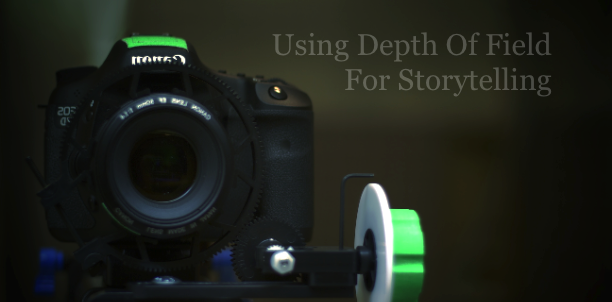
Using Depth of Field for Storytelling


Here's a great article we picked up on the DSLR Video Shooter blog:
“To make your video look like film use shallow depth of field.” This is a line I hear a lot, especially from DSLR shooters and it could not be farther from the truth. Yes, films use shallow DOF but that does not make them films. Depth of field is a tool with which to sculpt your shots. So just because we can now shoot at F1.2 does not mean we should. I know most of us are recovering from Large Sensor Deficiency Syndrome but with a little education and therapy, we can move on.
Read the rest here!

Sunday, February 20, 2011

Master Cinematographer Roger Deakins on Shooting with ARRI ALEXA: "Film Had a Good Run"

nofilmschool.com reposted a great interview with master cinematographer Roger Deakins, originally posted on /film:
[Shooting on Digital] gives me a lot more options. It’s got more latitude, it’s got better color rendition. It’s faster. I can immediately see what I’m recording. I can time that image on set with a color-calibrated monitor…. Am I nostalgic for film? … I mean, it’s had a good run, hasn’t it?
Here's a peek at the cinematography of True Grit, for which Deakins is nominated for a Best Cinematography Oscar, and which might end up being his last movie shot on film: